 By Audrey Hayes
Updated November 2026
A good dog crate for Labrador retriever owners does three things: it gives your dog enough room to stand, turn and lie down comfortably, it fits your home and your routine, and it feels like a safe den rather than a cage. This guide walks you through sizing, choosing a material and setting the crate up so your Lab settles in quickly.
Step 1: Measure Your Labrador Before You Buy
Labs range widely in size, so measure your own dog rather than relying on breed averages. Measure from the tip of the nose to the base of the tail for length, and from the floor to the top of the head or ears while your dog is standing, whichever is taller, for height. Then add 2 to 4 inches to each measurement for comfort.
Shopping for one? See our guide: Dog Beds for Crate Training: 6 Best Picks for Every Need (2026).
Most adult Labradors need an extra-large crate, typically 42 inches long. Puppies are different: buy a crate sized for the adult and use a divider panel to block off the extra space while your puppy grows. For more detail on dimensions, see XL Dog Crate Dimensions: How to Measure and Choose the Right Size (2026).
Step 2: Choose the Right Crate Type for Your Home
Each crate style suits different needs. Consider how you will use it before you decide.
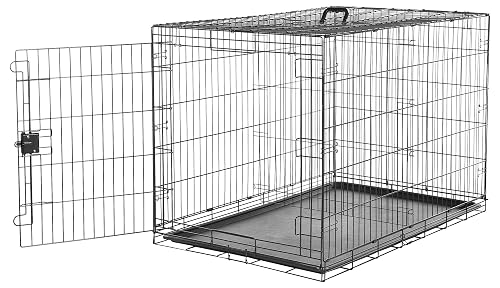
- Wire crates offer airflow and visibility, and most include a removable tray and a divider. They work well for home training and are easy to clean.
- Plastic (airline-style) crates are enclosed and often used for travel, though they can feel warmer in summer.
- Furniture-style crates blend into living spaces and suit calm, adult dogs, but chewers may damage them.
- Soft-sided crates are light and portable but are rarely strong enough for a determined Lab.
For a closer look at options, read XL Dog Training Crate: How to Choose and Set Up the Right One and Wire Dog Crates: Home Use and Limits.
Step 3: Set Up the Crate So Your Lab Wants to Use It
Placement and bedding matter as much as the crate itself. Follow these steps:
- Place the crate in a quiet area of the house where your family spends time, such as a corner of the living room or bedroom. Avoid drafts and direct sun.
- Add a chew-resistant bed sized to the crate floor. Labs often chew bedding, so choose durable materials.
- Put a few safe chew toys inside, and leave the door open so your dog can enter on their own.
- Use a divider for puppies so the space is just large enough to stand and turn around in.
- Never leave a collar with a tag hanging loose inside the crate, as it can catch on the bars.
Once the setup is right, training becomes much easier. The full process is covered in Labrador Retriever Crate Training: A Step-by-Step Guide for New Owners.
Step 4: Plan Realistic Crate Time
A crate is a management tool, not a place for long stretches of confinement. Adult dogs should not be crated for more than a few hours at a time during the day, and puppies need regular bathroom breaks. Plan for exercise, play and bathroom trips before and after each crate session. For guidance on daily time limits, see When Crate Training How Many Hours a Day Is Right for Your Dog.
Common Mistakes to Avoid
- Buying a crate that is too small in the hope your Lab will “grow into it” as an adult.
- Using the crate as punishment, which makes your dog less willing to enter it.
- Leaving toys with loose parts or stuffing that a Lab could swallow.
- Skipping the divider with a puppy, which allows accidents in one corner.
- Rushing to close the door before your dog is relaxed inside.
Recommended Gear
- Extra-large wire dog crate with divider: A divider panel lets you adjust the space as your puppy grows. View on Amazon
- Chew-resistant dog crate bed: Durable bedding stands up better to a Lab’s chewing than standard fabric beds. View on Amazon
- Durable chew toys for large dogs: Sturdy toys give your Lab something safe to do while crated. View on Amazon
FAQ
What size dog crate does a Labrador retriever need?
Most adult Labs need an extra-large crate, often around 42 inches long. Measure your dog from nose to tail base and add a few inches so they can stand and turn comfortably.
Should I buy a bigger crate for my Lab puppy?
Buy a crate sized for the adult dog and use a divider to block off the extra space. This keeps the puppy from soiling one end and lets you adjust as they grow.
How long can a Labrador stay in a crate?
Adult Labs should not spend long stretches crated during the day, and puppies need frequent bathroom breaks. If you are unsure about your dog’s needs, ask your veterinarian or a certified trainer.
Conclusion
Choose a crate sized to your Lab’s adult measurements, pick a style that fits your home and set it up in a calm spot with comfortable bedding. With a sensible routine and realistic time limits, the crate can become a safe retreat your Labrador chooses to use.
Ready to choose one?
About Audrey Hayes
Audrey Hayes is part of our editorial team and reviews and edits our dogs & puppies guides, checking product details against manufacturer specifications and owner feedback.