 By Audrey Hayes
Updated November 2026
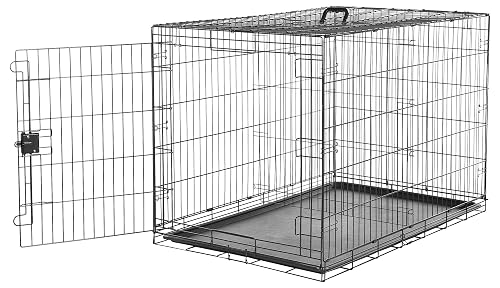
A good dog crate for a golden retriever gives your dog enough room to stand, turn around and lie down stretched out, while staying cozy enough that it feels like a den. In this guide you will learn how to measure your dog, pick the right crate style and set it up so your golden settles in quickly. Golden retrievers are large, active and often very food-motivated, so the crate you choose matters more than it might for a smaller breed.
Step 1: Measure Your Golden Retriever Correctly
Crate sizing starts with three measurements taken on your dog while he is standing naturally. Use a soft measuring tape and round up to the nearest inch.
- Length: Measure from the tip of the nose to the base of the tail.
- Height: Measure from the floor to the top of the head or ears, whichever is taller.
- Width: Measure at the widest point, usually the shoulders or chest.
Most adult golden retrievers fall into the large to extra-large range, so a crate sized for a Labrador Retriever is often a good starting point. For more detail on fitting a large retriever, see Dog Crate for Labrador Retriever: How to Size, Choose and Set One Up. Always compare your numbers to the manufacturer’s internal dimensions, since listed outside measurements can be misleading.
Step 2: Choose the Right Crate Style for Your Home
Golden retrievers do best in a crate that is open, airy and sturdy enough to handle a determined chewer. The three most common styles each have trade-offs.
| Crate type | Best for | Watch out for |
|---|---|---|
| Wire crate | Visibility, airflow, home training | Some dogs can push or bend thin wire |
| Plastic (airline-style) crate | Travel, a den-like feel, nighttime | Less airflow; can get warm in summer |
| Wood furniture crate | Living rooms, a decorative look | Heavy chewers may damage it; check interior sizing |
For a more detailed comparison of wire options, read Wire Crate for Dog: 7 Best Picks for Home, Training and Travel. If you plan to use the crate at night, Crate Training Golden Retriever Puppy at Night (2026): Wire vs Plastic Crate? covers the trade-offs in more depth.
Step 3: Plan for Growth and Sizing Gaps
Puppies grow fast, and a golden can reach adult size between 12 and 18 months. Some owners buy a crate that fits the adult dog and use a divider panel for the puppy stage. A divider keeps the space small enough that the puppy cannot toilet in one corner and then lie in it. Remove the divider as your dog grows. Owners often report that this approach works well, but only if the crate is still roomy enough for an adult to stand and turn without strain.
Step 4: Set Up the Crate for Comfort and Safety
Place the crate in a quiet corner of a family room, not in a garage or isolated hallway. Golden retrievers are social, and total isolation often leads to barking or anxiety. Add a bed or mat sized to the floor of the crate, and check that any pad is firm and washable. A water-resistant liner is useful during the puppy stage, and Waterproof Dog Crate Pad: How to Choose, Fit and Keep It Dry explains how to keep one clean. Remove collars and any loose toys before closing the door, and never leave a chew toy with stuffing or small parts inside.
Common Mistakes to Avoid
- Buying a crate that is too small because it looks manageable in the store.
- Using the crate as punishment, which makes it harder to build a positive association.
- Leaving a puppy in the crate for long stretches without bathroom breaks.
- Skipping a secure latch check, since a determined golden can work a loose door open.
- Ignoring the crate’s height, which matters for an adult golden who may need to sit tall.
Recommended Gear
A sturdy, well-fitted crate is the core item, but a few accessories make the setup easier.
- MidWest Homes for Pets Dog Crate: A widely available wire crate with a divider panel, useful for growing puppies. View on Amazon
- Frisco Quilted Pet Bed: A padded bed sized for large breeds that fits neatly inside most large crates. View on Amazon
- Waterproof crate pad: A washable, water-resistant liner that protects the crate floor during potty training. View on Amazon
FAQ
How big should a dog crate be for an adult golden retriever?
An adult golden usually needs a large or extra-large crate. Measure length, height and width on your dog, then check the manufacturer’s inside dimensions before buying.
Can I use a plastic crate for my golden retriever?
Yes. Plastic airline-style crates are sturdy and cozy, but they offer less airflow than wire, so check that the space stays cool in warm weather.
Should I consult a professional about crate training?
If your dog shows extreme distress, such as injuring itself or refusing food for long periods, consult a veterinarian or a certified professional trainer for personalized guidance.
Conclusion
Measure your golden carefully, choose a crate style that suits your home and plan for growth if you have a puppy. With the right size and a comfortable setup, the crate becomes a safe place your golden will willingly enter. Keep training sessions short and positive, and adjust as your dog matures.
Related reading
- Golden Retriever Crate Training: A Step-by-Step Guide for New Owners
- Crate Training Golden Retriever Puppy: A Step-by-Step Guide
Ready to choose one?
About Audrey Hayes
Audrey Hayes is part of our editorial team and reviews and edits our dogs & puppies guides, checking product details against manufacturer specifications and owner feedback.