By Caleb Morgan
Updated November 2026
Puppy crate training barking is one of the most common frustrations new owners face. A young dog that cries or yelps in its crate at night can leave the whole household short on sleep, and it can make the crate feel like a punishment instead of a safe den. The products below are meant to support a sound training plan, not replace one. Each was selected by looking at manufacturer specifications, brand reputation, and the patterns owners tend to describe in feedback, with attention to whether a device is suitable for puppies at all. Several of these tools are designed for adult dogs, so the size and sensitivity options matter a great deal.
Our top picks at a glance
- 1
 TOP CHOICEBest overallShaker Can for Dogs, Dog Training, Stop Barking, Behavior Aid, No ShockView on Amazon
- 2
 TOP CHOICEBest for crate-side interruption6 Training Modes 23 FT Range Barks No More Compact Bark ControlView on Amazon
- 3
 TOP CHOICEBest for small kitchens and tight spacesMini ultrasonic dog bark deterrent device (Light Pink)View on Amazon
- 4
 Best for larger dogsFAFAFROG Dog Bark Collar, Rechargeable Smart CollarView on Amazon
- 5
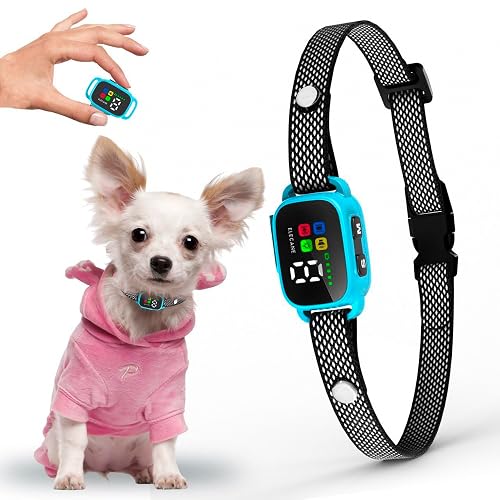 Best for small puppiesTiny Bark Collar for Small Dogs 5-15 lbs and Puppies (Blue)View on Amazon
- 6
 Best for calming background noiseYogasleep Pawzz White Noise Machine for DogsView on Amazon
Our Top Picks
Quick Comparison
| Product | Best for | Key feature |
|---|---|---|
| Shaker Can for Dogs, Dog Training, Stop Barking, Behavior Aid, No Shock | Interrupting barking without shock | Hand-held shaker used as a marker sound |
| 6 Training Modes 23 FT Range Barks No More Compact Bark Control | Multi-setting deterrence | Six training modes and a 23 ft range |
| Mini ultrasonic dog bark deterrent device | Small spaces and portability | Compact, rechargeable, about 50 ft range |
| FAFAFROG Dog Bark Collar, Rechargeable Smart Collar | Medium to large dogs | Five adjustable sensitivity levels |
| Tiny Bark Collar for Small Dogs 5-15 lbs and Puppies | Small breeds and smaller puppies | Seven sensitivity levels, beep and vibration modes |
| Yogasleep Pawzz White Noise Machine for Dogs | Calming ambient sound at night | Integrated bark sensor and natural sounds |
Shaker Can for Dogs, Dog Training, Stop Barking, Behavior Aid, No Shock
Shaker Can for Dogs, Dog Training, Stop Barking, Behavior Aid, No Shock
Best for: Interrupting barking without shock or pain
This type of tool suits owners who want a simple, hands-on interruption. Trainers commonly use a shaker can to mark an unwanted behavior with a sudden sound, then reward quiet. It works best when the owner is present and paying attention.
Key specs
- Hand-held shaker design
- No electric shock
- Designed as a behavior aid for dog training
Pros
- Simple to use with no batteries or charging
- Can be paired directly with reward-based training
- Low-tech and easy to understand for beginners
Cons
- Requires an attentive owner, so it does little for barking when no one is awake
- Can startle a sensitive puppy if used too loudly
Bottom line: A good first tool for owners who can supervise training sessions and want a no-shock option.
6 Training Modes 23 FT Range Barks No More Compact Bark Control
6 Training Modes 23 FT Range Barks No More Safe & Humane Rechargeable Compact Bark Control for Indoor Outdoor Dog Bark Deterrent Device, 3X Ultrasonic Anti Barking Devices
Best for: Owners who want several deterrence settings to try
This listing describes a rechargeable, compact device with multiple training modes and a 23 ft range. It is aimed at indoor and outdoor use, so owners can test which setting a dog responds to.
Key specs
- Six training modes
- Stated range of 23 ft
- Rechargeable and compact
Pros
- Multiple modes allow adjustment to the individual dog
- Portable and easy to position near a crate
- Rechargeable, so no ongoing battery purchases
Cons
- Ultrasonic devices can affect dogs differently, and some owners report inconsistent results
- Puppies can be startled by unfamiliar tones, so start at the lowest setting
Bottom line: Suited to owners who want flexibility and are willing to experiment carefully with settings.
Mini ultrasonic dog bark deterrent device (Light Pink)
Mini ultrasonic dog bark deterrent device, effectively stops unwanted barking with 50ft,pain free training & behavior aid for indoor/outdoor use,rechargeable portable dog barking stopper (Light Pink)
Best for: Small spaces and portable use
A small, pocket-sized deterrent works well for apartments or a crate placed in a bedroom corner. Its listing describes a roughly 50 ft range and rechargeable power for indoor and outdoor use.
Key specs
- Compact, portable form factor
- Stated range of about 50 ft
- Rechargeable battery
Pros
- Easy to move between rooms
- Takes up almost no space beside a crate
- Rechargeable design
Cons
- Effectiveness varies by dog and by environment
- Limited to one or a few settings compared with multi-mode devices
Bottom line: A practical choice for owners in small homes who want a discreet, portable deterrent.
FAFAFROG Dog Bark Collar, Rechargeable Smart Collar
FAFAFROG Dog Bark Collar, Rechargeable Smart Collar, Anti Barking Training Collar with 5 Adjustable Sensitivity Beep Vibration, Bark Collar for Large Medium Small Dogs (Black)
Best for: Medium to large dogs needing adjustable sensitivity
This collar lists five adjustable sensitivity levels and beep and vibration modes. It is sized for medium, large, and small dogs, so fit and weight should be checked carefully before use.
Key specs
- Five adjustable sensitivity levels
- Beep and vibration modes
- Rechargeable
Pros
- Adjustable sensitivity suits different voice volumes
- Rechargeable, reducing battery waste
- Offers a non-shock correction option
Cons
- Most bark collars are not recommended for very young puppies, so age and weight matter
- Collars can cause skin irritation if worn too tightly or left on too long
Bottom line: Better for older or larger dogs than for a young puppy in crate training. Consult your veterinarian before using any collar on a puppy.
Tiny Bark Collar for Small Dogs 5-15 lbs and Puppies (Blue)
Tiny Bark Collar for Small Dogs 5-15 lbs and Puppies – No Shock Anti Barking Collar – Rechargeable Smart Collar for Dog Training with 7 Sensitivity Levels and 3 Beep&Vibration Modes (Blue)
Best for: Small breeds and smaller puppies
The listing names a weight range of 5 to 15 lbs and includes puppies, making it one of the few collars in this group aimed at tiny dogs. Seven sensitivity levels give more room for fine adjustment.
Key specs
- Designed for dogs 5 to 15 lbs
- Seven sensitivity levels
- Three beep and vibration modes
Pros
- Weight range matches small puppies better than most collars
- Fine sensitivity control helps prevent overcorrection
- Non-shock design
Cons
- Fit must be checked closely on a puppy that is still growing
- Vibration can still startle a young dog during early training
Bottom line: The most relevant option here for small puppies, but use the lowest setting and confirm with your veterinarian first.
Yogasleep Pawzz White Noise Machine for Dogs
Yogasleep Pawzz White Noise Machine for Dogs, Home & All Pets. with Integrated Bark Sensor, 6 Automatic Relaxing Natural Sounds, Help Keep Pets Calm, Anti-Barking with Training, Noise Canceling
Best for: Calming background noise during crate time
Rather than correcting barking directly, this machine plays relaxing natural sounds and includes a bark sensor. Owners often use white noise to mask household sounds that trigger barking, such as hallway traffic or a neighbor’s door.
Key specs
- Integrated bark sensor
- Six automatic natural sounds
- Designed for dogs and other pets
Pros
- No correction involved, so it suits anxious puppies
- Masks outside noise that can set off barking
- Automatic sound cycling reduces owner effort
Cons
- Does not teach the puppy to stop barking on its own
- Sensor-based responses may not catch every bark
Bottom line: A gentle option for owners whose puppy seems anxious or reacts to noise, best paired with a structured crate routine.
Buying Guide
Choose a method that matches your puppy’s age and size
Many bark collars and deterrents are designed for adult dogs. A puppy’s developing nervous system and small body can react strongly to corrections, so age, weight, and temperament should guide your choice. Many trainers recommend building a basic crate routine first and adding a tool only if barking persists.
Good picks for this: Tiny Bark Collar for Small Dogs 5-15 lbs and Puppies; Yogasleep Pawzz White Noise Machine for Dogs
Look for adjustable sensitivity
Devices with several sensitivity or mode settings let you start low and raise the level only if needed. Owners often report that a dog’s response depends on the setting, so a range of options is useful.
Good picks for this: FAFAFROG Dog Bark Collar, Rechargeable Smart Collar; Tiny Bark Collar for Small Dogs 5-15 lbs and Puppies
Check the range and placement
Range numbers in product listings describe how far a signal may travel under ideal conditions. Walls, furniture, and the dog’s position all affect results. Place a deterrent near the crate, not across the room, and test it at low volume first.
Good picks for this: Mini ultrasonic dog bark deterrent device (Light Pink); 6 Training Modes 23 FT Range Barks No More Compact Bark Control
Consider non-correction options
Some puppies bark out of fear, loneliness, or noise sensitivity rather than attention-seeking. In those cases a calming sound source or a hand-held marker used during training may be more appropriate than any correction device.
Good picks for this: Yogasleep Pawzz White Noise Machine for Dogs; Shaker Can for Dogs, Dog Training, Stop Barking, Behavior Aid, No Shock
Check rechargeability and power
Rechargeable units avoid repeated battery purchases and can be easier to keep charged on a schedule. Check how the device charges and whether it can be left on a charger overnight.
Good picks for this: FAFAFROG Dog Bark Collar, Rechargeable Smart Collar; Mini ultrasonic dog bark deterrent device (Light Pink)
Think about fit and comfort
Collars should fit snugly enough that a finger slides under the strap but not so tightly that the neck is pressed. Puppies gain weight and grow quickly, so re-check fit every week or two during the first months.
Good picks for this: Tiny Bark Collar for Small Dogs 5-15 lbs and Puppies; FAFAFROG Dog Bark Collar, Rechargeable Smart Collar
Pair any tool with a steady crate routine
No device replaces a consistent schedule, a comfortable crate, and appropriate potty breaks. Barking often drops when the puppy is tired, fed, and has learned that the crate is a calm place. Use a tool to support the routine, not to replace it.
Good picks for this: Shaker Can for Dogs, Dog Training, Stop Barking, Behavior Aid, No Shock; Yogasleep Pawzz White Noise Machine for Dogs
FAQ
Is it safe to use a bark collar on a puppy?
Many bark collars are designed for adult dogs and specify minimum weights or ages. Puppies are still developing, so check the listed weight range and talk with your veterinarian before using any collar on a young dog.
Will a bark deterrent stop puppy crate barking on its own?
Not reliably. Deterrents may interrupt barking, but they do not teach a puppy that the crate is safe. Pair any device with reward-based training, regular potty breaks, and exercise before crate time.
Why does my puppy bark in the crate at night?
Common reasons include needing to go outside, hunger, boredom, loneliness, or a crate that is too large or uncomfortable. Rule out physical needs first, then adjust the routine and setup.
Should I ignore crate barking?
Ignoring barking works only if the puppy is not in need of a bathroom break, food, or comfort. If the puppy is fine, brief silence can be rewarded. If the crying seems distressed, check in calmly and reassess the routine.
How long should a puppy be left in the crate?
A common guideline is that a puppy can hold its bladder about one hour per month of age, plus one. Very young puppies need frequent breaks, so crate time should be kept short during the early weeks.
Can a white noise machine help a puppy settle?
Some owners find that steady background sound masks outside noises that trigger barking. Results vary, so watch how your puppy responds and adjust the volume and placement.
When should I call a professional?
If barking is accompanied by panic, self-injury, destructive behavior, or no improvement after several weeks of consistent training, consult your veterinarian or a certified dog behavior professional.
Conclusion
For most new owners, the best approach to puppy crate training barking starts with a sound routine: adequate exercise, potty breaks, a comfortable crate, and calm reinforcement. Among the products above, the Shaker Can for Dogs suits owners who want a simple, no-shock interruption tool they can use while supervising. The Tiny Bark Collar for Small Dogs 5-15 lbs and Puppies is the most relevant collar for small puppies, though it still requires veterinary guidance. The Yogasleep Pawzz White Noise Machine for Dogs suits anxious or noise-sensitive puppies. Owners of older or larger dogs may find the FAFAFROG collar or the multi-mode Compact Bark Control more appropriate. Whatever you choose, change one variable at a time and track what works.
Sources
- General guidance on crate training, puppy development, and common barking causes (akc.org)
- Background on animal bite prevention and safe handling of dogs in the home (cdc.gov)
- Position statements and owner resources on humane training and pet behavior (avma.org)
Related reading
- Why Is Crate Training Important for Puppies? Benefits and How-To
- What Is the Purpose of Crate Training a Puppy? Benefits and How It Works
- What Age to Start Crate Training a Puppy: A Step-by-Step Guide
- Schedule for Crate Training: A Step-by-Step Daily Plan for Puppies and Dogs
- Puppy Crate Training Games: 8 Fun Ways to Build Crate Love
- Potty Training Dog Crate: A Step-by-Step Guide for New Puppy Owners
About Caleb Morgan
Caleb Morgan is part of our editorial team and reviews and edits our dogs & puppies guides, checking product details against manufacturer specifications and owner feedback.