By Caleb Morgan
Updated November 2026
If you are looking for the right crate training doberman puppy setup, you are probably trying to balance three things: a crate big enough for a fast-growing Doberman, a metal build that holds up to a strong chewer, and a training resource that gives you a clear plan. This list covers seven options that fit those needs. We judged each one on documented specifications, brand reputation, the kinds of feedback owners commonly report, and how well it matches the realistic needs of a Doberman puppy, not on any hands-on testing of our own. Use it as a starting point, then check the measurements against your puppy’s expected adult size.
Our top picks at a glance
- 1
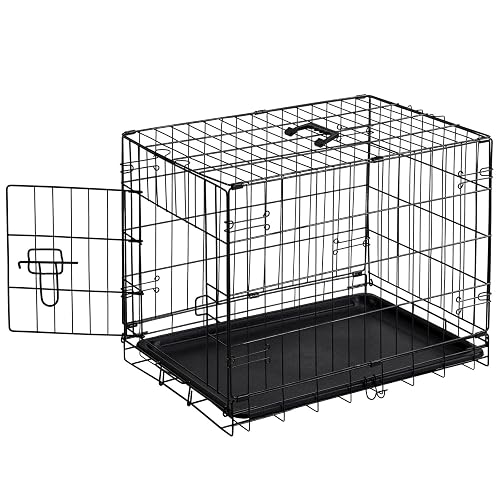
 TOP CHOICEBest overallDouble Door Metal Wire, Plastic Leak-Proof Pan Tray, Portable Indoor OView on Amazon
- 2
 TOP CHOICEBest for growing puppiesSweetcrispy 24 Inch Dog Crate, Single Door Metal Kennel, Secure Lock, Removable TrayView on Amazon
- 3
 TOP CHOICEBest training guide for beginnersCrate Training Puppies: Learn How to Crate Train Your Dog the Fast and Easy WayView on Amazon
- 4
 Best all-in-one puppy programThe Positive Reinforcement Guide for Puppy Training: Step-by-Step ObedView on Amazon
- 5
 Best breed-specific referenceThe Complete Guide to Doberman Pinschers: Preparing for, Raising, TraiView on Amazon
- 6
 Best short step-by-step programCrate Training Your Puppy: How to Crate train Your Puppy in Few Days –View on Amazon
- 7
 Best comfort aid for anxious puppiesHeartbeat Puppy Toys Dog Heartbeat Toy for Dog Anxiety Relief and CalmView on Amazon
Our Top Picks
Quick Comparison
| Product | Best for | Key feature |
|---|---|---|
| DUMOS 48 Inch Dog Crate | Adult-size Doberman planning ahead | Double door, leak-proof pan tray |
| Crate Training Puppies: Learn How to Crate Train Your Dog the Fast and Easy Way | Owners who want a focused crate guide | Step-based crate training method |
| Sweetcrispy 24 Inch Dog Crate | Very young puppies in a smaller space | Single door with secure lock |
| The Positive Reinforcement Guide for Puppy Training | Owners wanting one complete puppy program | Covers crate, potty, and obedience |
| The Complete Guide to Doberman Pinschers | Owners who want breed-specific context | Covers training, feeding, and socialization |
| Crate Training Your Puppy: How to Crate Train Your Puppy in Few Days | Owners wanting a quick, structured plan | Step-by-step program format |
| Heartbeat Puppy Toy | Puppies that settle poorly at night | Heartbeat-style calming plush |
DUMOS 48 Inch Dog Crate, Double Door Metal Wire Leak-Proof Pan Tray Portable Indoor Outdoor Training Travel
Double Door Metal Wire, Plastic Leak-Proof Pan Tray, Portable Indoor Outdoor Training Travel DUMOS 48 Inch Dog Crate, Puppy Small Medium Foldable Dog Cage Pet Kennel
Best for: Adult-size Doberman planning ahead
This is the crate to consider if you want one enclosure that can serve your Doberman through adulthood rather than buying a second crate in a few months. Owners of large dogs generally find the 48-inch length the most practical starting point for a Doberman’s eventual frame.
Key specs:
- 48-inch length, sized for large breeds
- Metal wire construction
- Double door design
- Removable leak-proof plastic pan tray
- Foldable and portable
Pros:
- Room for a Doberman to stand, turn, and lie down stretched out
- Double doors make loading and cleaning easier
- The removable tray simplifies accidents during house training
Cons:
- Large footprint may not fit small apartments
- Oversized for a very young puppy, so you may need a divider
Bottom line: A strong pick for owners who want one crate to last into adulthood and have floor space for it.
Crate Training Puppies: Learn How to Crate Train Your Dog the Fast and Easy Way
Crate Training Puppies: Learn How to Crate Train Your Dog the Fast and Easy Way (Dog Training)
Best for: Owners who want a focused crate guide
This book suits a first-time Doberman owner who wants a clear method for building crate acceptance without relying on trial and error. It works well alongside a physical crate you already have.
Key specs:
- Printed guide focused on crate training
- Written for puppies and dogs
Pros:
- Concentrated on one skill, so it is easy to follow
- Good companion to a step-by-step daily routine
- Useful reference you can revisit during setbacks
Cons:
- Covers only crate training, not the wider puppy program
- Methods still need adapting to a fast-maturing breed
Bottom line: Best for owners who want a focused, readable method rather than a broad training library.
Sweetcrispy 24 Inch Dog Crate, Single Door Metal Kennel, Secure Lock, Removable Tray
Single Door, Metal Kennel, Secure Lock, Removable Tray, Indoor Outdoor Training Travel Sweetcrispy Dog Crate, 24 Inch Small Dog Puppy Cage, Foldable Pet Kennel
Best for: Very young puppies in a smaller space
A 24-inch crate is a sensible choice for the first weeks, when a Doberman puppy needs a snug den-sized space to feel secure and to avoid soiling a larger area. It is too small for an adult Doberman, so plan to upsize.
Key specs:
- 24-inch length
- Metal kennel construction
- Single door with secure lock
- Removable tray
- Foldable
Pros:
- Compact size encourages a den-like feeling for young puppies
- Secure lock helps prevent accidental door opening
- Removable tray is easy to clean
Cons:
- Too small for an adult Doberman
- Single door offers less flexibility for loading
Bottom line: Good for the early months, but budget for a larger crate as your puppy grows.
The Positive Reinforcement Guide for Puppy Training: Step-by-Step Obedience, Socialization, Crate and Potty Training
The Positive Reinforcement Guide for Puppy Training: Step-by-Step Obedience, Socialization, Crate and Potty Training Every Paw Parent Needs to Raise a Well-Behaved Dog from 8 Weeks to Adult
Best for: Owners wanting one complete puppy program
If you want crate work tied into potty training, obedience, and socialization from 8 weeks onward, this book covers the whole puppy timeline in one place. It fits owners who prefer positive reinforcement methods.
Key specs:
- Covers 8 weeks through adulthood
- Topics: obedience, socialization, crate and potty training
Pros:
- Connects crate training to the rest of the puppy routine
- Positive reinforcement focus suits sensitive dogs
- Broad scope reduces the need for multiple books
Cons:
- Broad coverage means less depth on any single topic
- Not Doberman-specific
Bottom line: A strong all-in-one choice for owners who want a single reference for the first year.
The Complete Guide to Doberman Pinschers: Preparing for, Raising, Training, Feeding, Socializing, and Loving Your New Doberman Puppy
The Complete Guide to Doberman Pinschers: Preparing for, Raising, Training, Feeding, Socializing, and Loving Your New Doberman Puppy
Best for: Owners who want breed-specific context
This guide is the most breed-focused option on the list. It suits a buyer who wants to understand Doberman temperament, growth, and training needs before the puppy comes home.
Key specs:
- Doberman-specific guide
- Covers preparation, training, feeding, and socialization
Pros:
- Breed-specific advice on a large, active working breed
- Useful for planning crate size and daily exercise
- Covers the whole life stage, not just crate work
Cons:
- Crate training is only one section of a broader book
- Some general advice may need checking with your veterinarian
Bottom line: The right pick for owners who want Doberman-specific background alongside crate training.
Crate Training Your Puppy: How to Crate train Your Puppy in Few Days, A Step By Step Program
Crate Training Your Puppy: How to Crate train Your Puppy in Few Days – A Step By Step Program
Best for: Owners wanting a quick, structured plan
This program is built as a sequence of steps, which helps owners who prefer a checklist over open-ended reading. Expect a structured approach rather than a deep dive into behavior.
Key specs:
- Step-by-step program format
- Focused on crate training
Pros:
- Clear sequence makes it easy to follow daily
- Short focus keeps reading time low
- Good for owners who want a fast start
Cons:
- “Few days” timelines may be optimistic for a large breed
- Limited detail on breed-specific needs
Bottom line: Pick this if you want a checklist-style plan and plan to pace the steps to your puppy’s progress.
Heartbeat Puppy Toy for Dog Anxiety Relief and Calming Aid, Heartbeat Stuffed Animal for Puppy Sleep Aid Crate Training
Heartbeat Puppy Toys Dog Heartbeat Toy for Dog Anxiety Relief and Calming Aid, Heartbeat Stuffed Animal for Puppy Sleep Aid Crate Training, Puppy Essentials Needs Gifts
Best for: Puppies that settle poorly at night
Many owners use a heartbeat-style plush as a comfort object in the crate, especially during the first nights away from littermates. It is an aid, not a training method on its own.
Key specs:
- Plush toy with heartbeat-style feature
- Marketed as a calming aid for puppies
Pros:
- May provide comfort during early crate nights
- Soft plush is simple to place in the crate
- Works alongside your existing routine
Cons:
- Not a substitute for a proper crate schedule
- Plush toys can be chewed, so supervise closely and remove if shredded
Bottom line: A supportive extra for owners whose Doberman puppy struggles with the first nights, used with supervision.
Buying Guide
Crate Size and Adult Fit
A Doberman should be able to stand, turn around, and lie down stretched out without touching the walls. Many owners use the adult-size measurement as the target and add a divider to the crate while the puppy is young, which keeps the space from becoming a toilet area. Check the manufacturer’s listed interior dimensions, not just the exterior size.
Good picks for this: DUMOS 48 Inch Dog Crate, Sweetcrispy 24 Inch Dog Crate
Metal Build and Durability
Doberman puppies are strong chewers and can test latches and welds. Look for thick-gauge wire, reinforced corners, and a lock that a determined puppy cannot easily work open. Owners often report that flimsy frames bend under a large dog’s pushing.
Good picks for this: DUMOS 48 Inch Dog Crate, Sweetcrispy 24 Inch Dog Crate
Door Configuration
Double-door crates make loading, cleaning, and access easier, while single-door models are often more compact. Choose based on where the crate will sit and how you plan to enter it during training sessions.
Good picks for this: DUMOS 48 Inch Dog Crate, Sweetcrispy 24 Inch Dog Crate
Removable Tray and Cleaning
During house training, a removable, leak-proof pan makes cleanup faster and helps protect the floor. Confirm the tray slides out fully and that the surface is easy to wipe and dry.
Good picks for this: DUMOS 48 Inch Dog Crate, Sweetcrispy 24 Inch Dog Crate
Training Method and Structure
Crate work is only one piece of puppy care. Consider whether you want a focused method or a broader program covering potty training, obedience, and socialization. A structured, day-by-day plan tends to be easier to follow than general advice. Pair any guide with a consistent daily schedule.
Good picks for this: Crate Training Puppies: Learn How to Crate Train Your Dog the Fast and Easy Way, The Positive Reinforcement Guide for Puppy Training
Breed-Specific Considerations
Dobermans are large, energetic, and fast-growing. Breed-focused reading can help you plan exercise, feeding, and socialization around that profile. General puppy books may not account for how quickly a Doberman matures, so consider adding breed-specific context.
Good picks for this: The Complete Guide to Doberman Pinschers, The Positive Reinforcement Guide for Puppy Training
Comfort Aids and Supervision
Some puppies settle better with a soft, familiar object in the crate. Comfort aids can help, but remove any item that is being shredded or swallowed, and never leave a chewable toy unsupervised with a young puppy. Your veterinarian can advise if the puppy seems unusually distressed.
Good picks for this: Heartbeat Puppy Toy, Crate Training Your Puppy: How to Crate train Your Puppy in Few Days
FAQ
What size crate does a Doberman puppy need?
Plan for the adult size. A Doberman puppy should have room to stand, turn, and lie down stretched out. Many owners use a divider in a larger crate during the early months so the puppy does not have excess space to soil. Confirm the interior measurements against the breed’s expected adult height and length.
When should I start crate training a Doberman puppy?
Most owners begin as soon as the puppy comes home, using short, positive sessions. Keep the crate in a family area, introduce it gradually, and never use it as punishment. For more detail, see How to Start Crate Training Your Puppy: A Step-by-Step Guide for Beginners.
How long can a Doberman puppy stay in a crate?
A general rule for young puppies is limited crate time that matches their age and bladder control, with frequent potty breaks. Young puppies cannot hold it for long periods. For a daily framework, see Schedule for Crate Training: A Step-by-Step Daily Plan for Puppies and Dogs.
Is crate training a Doberman puppy at night a good idea?
Many owners find that a crate near the bed helps a puppy settle overnight and supports house training. The puppy may need one or more potty breaks during the night in the early weeks. For night-specific guidance, see Crate Training a Puppy Night Time: A Step-by-Step Guide.
What if my Doberman puppy cries in the crate?
Crying is common at first. Avoid rewarding it with release, make sure basic needs are met, and gradually extend crate time. If crying is intense or persistent, consult a professional such as your veterinarian or a certified trainer. The article Crate Training a Puppy That Cries: Calm Steps That Work covers calm steps.
Should I use a crate or a playpen for a Doberman puppy?
Each has a role. A crate supports sleep and house training, while a playpen gives more room during supervised play. Many owners use both. For a comparison, see Crate Training vs Playpen (2026): Which Is Better for Your Puppy?.
Can a crate be used for a puppy with separation issues?
A crate can help a puppy feel secure when it is introduced properly, but it should never be used to confine a puppy that is panicking. If separation distress is severe, speak with a veterinarian or certified behavior professional for guidance.
Conclusion
For most owners, the best crate training doberman puppy setup starts with a crate sized for the adult dog. The DUMOS 48 Inch Dog Crate fits owners who want a long-term enclosure, while the Sweetcrispy 24 Inch Dog Crate suits the very early weeks in a smaller space. For training guidance, a focused guide suits owners who want a clear method, while the all-in-one puppy program fits those who want crate, potty, and obedience covered together. The breed-specific Doberman guide adds useful context, and the heartbeat plush can support anxious puppies, used with supervision.
Sources
- Product safety guidance for pet products and home safety, useful when checking crates, latches, and small parts (cpsc.gov)
- Breed information and general guidance on puppy care, socialization, and training (akc.org)
- Veterinary association resources on animal welfare and when to seek professional help for behavior concerns (avma.org)
About Caleb Morgan
Caleb Morgan is part of our editorial team and reviews and edits our dogs & puppies guides, checking product details against manufacturer specifications and owner feedback.